
Why You Can't Penny Pinch Your Way Through a Rehab - The Mindset Shift Every Operator Has to Make
May 04, 2026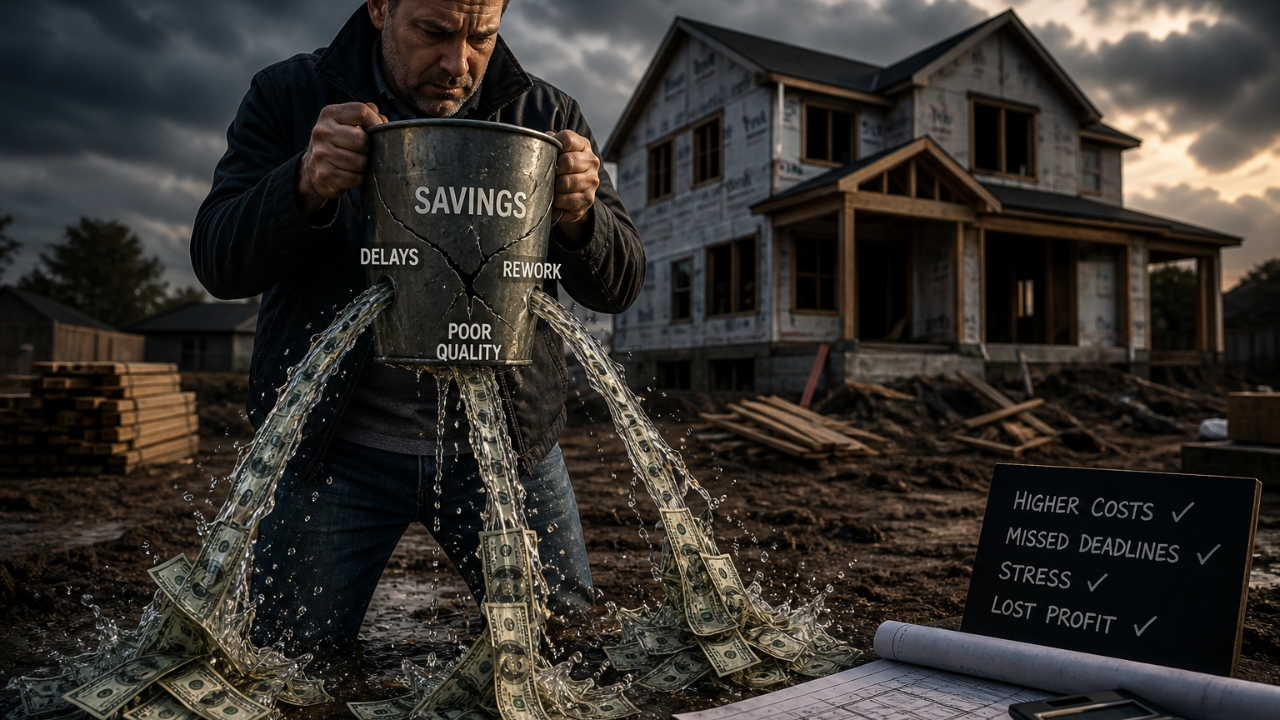
I'm about to admit something that might cost me a few readers.
I'm not a penny pincher.
There. I said it.
Now before you close this tab - hear me out. I'm not reckless. I'm not careless with money. And I know plenty of operators who are sharper than me at squeezing every dollar without compromising the job. Respect to them.
But after years in this business, I've noticed a pattern. The investors who struggle the most - the ones who burn out, blow up projects, and leave a trail of bad relationships behind them - almost all share the same flaw:
They try to penny pinch their way to the finish line.
And it doesn't work.
There's a fine line between being money conscious and being so cheap that it wrecks your timeline, your relationships, and your quality of work. If you're sitting on the wrong side of that line, this post is for you.
Saving Money vs. Making Money
Here's the mindset shift most operators never make:
Saving money is defensive. Making money is offensive.
When your whole strategy is built on cutting costs, every decision becomes about not losing. But this business doesn't reward people who play scared. It rewards people who execute, finish jobs cleanly, and build the kind of operation where good people want to work.
You don't grind your way to a great business by shaving $200 off every bid.
You build it by running clean projects, treating people right, and protecting the things that actually move the needle: timeline, quality, and your team.
Let's break down where this plays out.
Save on Materials First - Labor Last
If you're going to negotiate, start with materials. Not labor.
Materials are a transaction. Labor is a relationship.
You can shop suppliers, compare pricing, and find better rates without anyone taking it personally. A vendor isn't going to stop returning your calls because you asked for a better price on flooring.
But labor? That's different.
When you beat down a contractor's price, you're not just affecting their margin - you're affecting how they show up. How fast they get to your job. How carefully they do the work. How willing they are to absorb the small stuff when something goes sideways.
Squeeze them too hard and one of three things happens: the quality drops, the timeline slips, or they walk off the job entirely. None of those outcomes save you money.
So negotiate hard on the things that don't have feelings. Be careful with the things that do.
You Get What You Pay For (Yes, Even You)
We've all heard the saying. And we've all thought, yeah, but my situation will be different.
It won't.
You can find the cheapest contractor, the cheapest materials, the cheapest sub - and maybe you get away with it once. Maybe even twice. But eventually that bill comes due. And when it does, you pay it back with interest.
You pay it back in callbacks. In rework. In fixing what should've been done right the first time. In finding a second contractor to clean up after the first one. In missed deadlines. In holding costs. In headaches that show up on a Sunday night.
This is where the second principle comes in, and it's one I repeat constantly:
It costs what it costs.
You can negotiate the front end. You can pressure the price down. But the actual cost of getting a job done right doesn't move that much. If you push it artificially low at the beginning, you'll pay the difference somewhere else - in time, in quality, or in your sanity.
The number is the number. The only question is when you pay it.
Cheap Bids Slow You Down
Here's something most investors don't connect:
Obsessing over price will wreck your timeline. And a wrecked timeline destroys your budget.
I see it all the time. An operator gets a bid. Doesn't like the number. Gets another. Still too high. Gets another. And another. Two weeks later, they're still collecting quotes - meanwhile, the job sits, holding costs rack up, and the savings they were chasing have already evaporated.
And here's the part most operators miss: their own time was the most expensive thing they just spent. Two weeks chasing bids is two weeks not looking at the next deal, not managing other jobs, not doing the high-leverage work only you can do. You're the most expensive labor on the project - and you just spent yourself on a $500 negotiation.
Same thing with materials. You'll burn a week sourcing a deal on tile that saves you $300 - while the bathroom sits unfinished and your contractor is on a different job because yours wasn't ready.
People don't rush to jobs that don't make them money. And nobody puts their best work into a project where they feel squeezed from day one.
The math on penny pinching almost never adds up once you factor in time. Time is the most expensive line item on every job - and it never shows up on a quote.
Materials Aren't Just Materials. They're a Relationship.
Here's what most people miss about suppliers:
The cheapest supplier is rarely the best one for your business.
Your supplier isn't just selling you product. They're managing your delivery windows. They're flagging backorders before they wreck your schedule. They're swapping out damaged goods without making it a problem. They're answering the phone when something's wrong on a Friday afternoon.
That's not pricing. That's partnership.
I'd rather pay a little more for a supplier who knows my jobs, knows my expectations, and protects my timeline - than save 4% with a vendor who treats me like an order number.
And here's the funny thing: when you build that relationship, the price comes down on its own. Repeat business earns you better terms, better priority, and better problem-solving than any negotiated discount ever could.
You don't squeeze your way to a great supplier. You earn them.
Take Care of Your Team. Period.
This is the big one. The one that matters more than all the others combined.
Your team is your business.
Not your LLC. Not your software. Not your portfolio. Your team - the contractors, subs, project managers, and vendors who show up and execute - is the entire engine.
So here's how I think about it:
I want my team making money. Real money. Enough that they run a healthy business. Enough that things are good at home. Enough that the next time three rehabbers call them on the same day, mine is the call they pick up first.
When you beat your team down on price, you don't just make them less profitable - you make them less loyal. They start prioritizing the operators who pay better. They get slower to your jobs. They take less ownership when something goes wrong. And eventually, the best ones stop working with you altogether.
I'm not saying don't negotiate. I'm saying understand what you're negotiating against.
A few hundred bucks shaved off a bid means nothing if it costs you the relationship.
A team that wants to win with you is worth more than any line-item savings on a spreadsheet.
Final Word: Play Offense.
If there's one thing I want you to take from this:
Stop trying to save your way to success. Start trying to make your way there.
That doesn't mean spend recklessly. It means spend intentionally - on the things that protect your timeline, your quality, and your people. Because those three things are what actually drive profit.
The operators who thrive in this business aren't the ones who shaved the most off every invoice. They're the ones who built something people wanted to be part of.
Be that operator.