
The Project Manager’s Daily Rhythm: What a Productive Day Actually Looks Like
May 10, 2026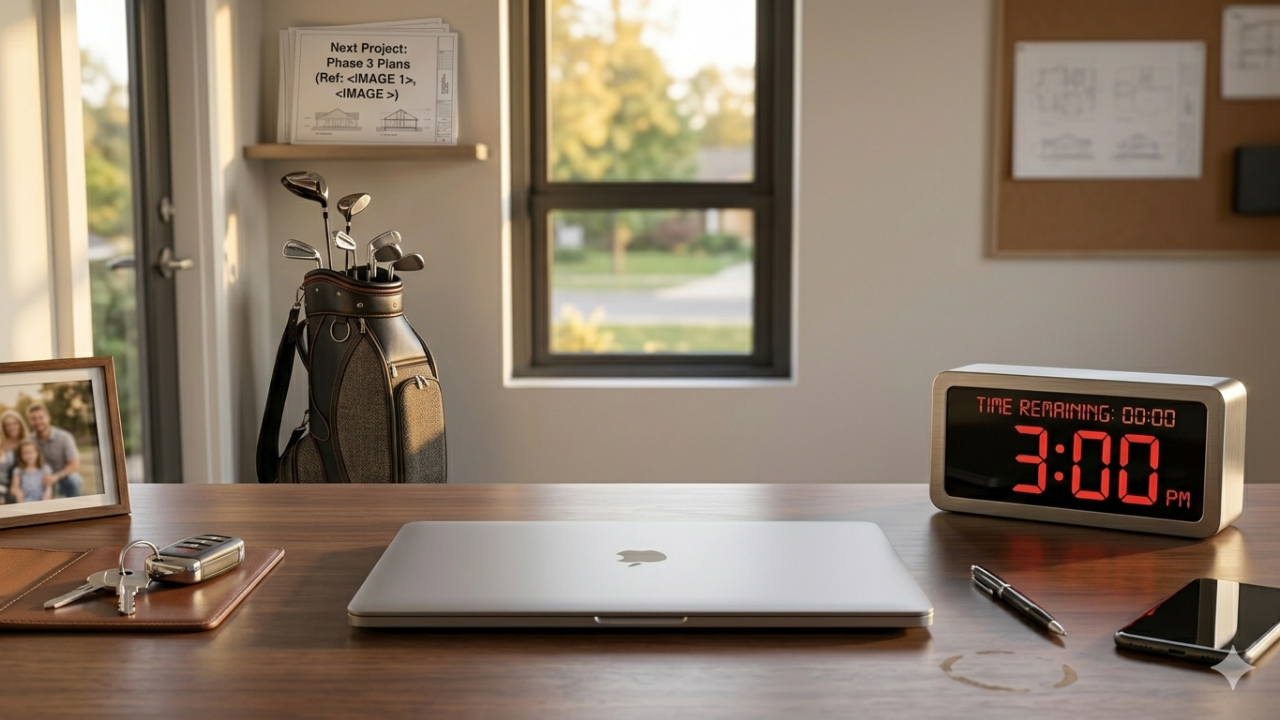
Most operators don't lose the day to one big mistake. They lose it in a hundred small ways - a missed measurement, a reactive morning, a contractor question that sat in the inbox until 4pm, a trip back to the site that should've never been needed.
It's not a work ethic problem. It's a rhythm problem.
The best operators I know don't out-grind anyone. They out-structure them. They run the same kind of day, over and over, until consistency starts compounding into clarity, profit, and time back.
And here's the part most people miss: that rhythm isn't an accident. It's built on purpose.
Let's get clear on what this is really about. We're talking about project management - the discipline of running jobs without dropping balls, without showing up to site empty-handed, without finding out at 4:30pm that nobody ordered the tile.
What follows is a framework I've watched the best operators in this business use to plan their days. Take all of it. Take some of it. But understand the principles - and steal what fits how you run.
It Starts the Night Before
The productive day doesn't start in the morning. It starts the night before.
If you're planning your day in the morning, you're already losing. You're tired, the inbox is filling up, and a fire is probably already lit somewhere on a job site. Reactive planning produces a reactive day.
Before you call it the night before, sit down for ten minutes and map the next day. What's the deep work? What are the must-do tasks? What does the field run look like? What do you need to bring with you, measure, photograph, or confirm?
That ten minutes is the highest-leverage time in your whole day. Because tomorrow morning, you don't think - you execute.
Morning in the Office: Deep Work, Then Tasks
Start in the office. In that order: deep work first, then tasks. Not the other way around.
Deep work is the focused, no-distraction work that actually moves a project forward - reviewing building plans and engineering, dialing in a budget, writing a scope or contractor agreement, walking through a draw schedule.
It's the kind of work that requires your brain fully on, and it's almost always what gets pushed to "later" when the day gets noisy. Block at least an hour for it first thing. Phone face-down. Inbox closed.
After deep work, pivot to urgent tasks - the list of things that, if left undone, will float around in your head all day and chew up your bandwidth. Scheduling subs. Ordering materials. Sending the follow-up email you've been sitting on. Knocking out the admin work that builds up if you ignore it.
Make the list. Knock it out. Don't carry yesterday into today.
The goal of the morning office block is simple: walk out the door with a clear head and nothing hanging over you.
Get Into the Field
Ideally, by 9am you're in the field - the actual job site, where the work is happening and where the real decisions get made. The most elite PMs I know are on-site by 8am. That's the bar at the top.
Some mornings your deep work or task list will hold you a little longer, and that's fine. But the goal is to be on-site early, while the day still has shape.
Here's an unspoken truth about project management: it's a job that demands an early wake and an early start. The upside? PMs are usually done before most other professions. Trade the early alarm for the early finish - that's the deal.
This is where mistakes get caught and clarity gets created. You're not on-site to babysit. You're on-site to lead - to walk the job, answer questions, and make the calls that keep the project moving.
Here's the discipline: don't leave until you've gotten everything you came for.
Ever driven back to the office at 1pm and realized - halfway there - that you forgot to measure for the tile order? I have. It's a self-inflicted setback, almost always because we let the day push us off-site before the work was done.
Bring the list. Take the photos. Get the takeoffs. Have the conversations. Then you head back.
The Reset: Lunch, Break, Mindset Shift
Yes, you need to eat. But this break is doing more than feeding you.
You're shifting from a field mindset to an office mindset - and that's a real switch. Field mode is reactive, mobile, fast. Office mode is focused, quiet, analytical.
You can't slam from one straight into the other and expect either one to be sharp.
Take 30–45 minutes. Eat. Step away from work. Get a workout in if that's how you clear your head - that's often my move.
Just don't sit down to a heavy lunch and expect to do focused office work afterward. You'll be in a food coma until 3pm, and the afternoon will get away from you.
This isn't soft. It's strategic.
Afternoon Office: Capitalize on the Field
The afternoon office block is where everything you saw and learned in the field turns into action.
Answering contractor questions. Sending bid requests. Following up on quotes. Confirming deliveries. Updating the schedule. Logging photos and notes from the walkthrough.
The afternoon mirrors the morning - focused, list-driven, decisive - but it's fueled by what you just gathered on-site.
Here's the catch: if you do this block well, your morning task list tomorrow shrinks dramatically. Which means tomorrow you get to spend more time in deep work, or get to the field even earlier. The rhythm starts compounding.
This is also where most operators leak time. They get back to the office, get sucked into Slack, the inbox, a phone call - and the field intel they just gathered sits unprocessed until the next day.
Don't let that happen. Run the list.
Plan Tomorrow. Then Close the Laptop.
Before you call it a day, plan the next one. Deep work. Tasks. Field run. Anything you need to prep tonight so tomorrow doesn't start cold.
This is the loop. Plan, execute, capture, plan again. It's how you stop guessing your way through the week.
And here's the part nobody tells you: when you run this rhythm well, you can actually be done early. 3pm. Sometimes 2pm.
This isn't a clock-in, clock-out role - it's a get-the-job-done role. The reward for running a tight day is the time on the back end. Time for family. Time for hobbies. Time to work on the rest of the business.
Final Word: This Is the PM Day. You're Often More Than the PM.
Everything above is a project manager's day. If you're a pure PM, this is your blueprint.
But most of you reading this are operators - which means you're also wearing the acquisitions hat, the sales hat, the office management hat, sometimes the sledgehammer too. Some of your days will look exactly like this. Other days will be all acquisitions and growth. Most weeks are a hybrid.
That's fine. The point isn't to copy this day exactly. The point is to see how an elite PM structures their time, then build the version of the day that fits how you operate.
Plan the night before. Deep work first. Field with intent. Reset between modes. Capture in the afternoon. Plan again before you close.
That's the rhythm. Run it long enough and the business starts to feel less like a daily fire drill and more like a job you actually run.